

You’ve probably seen a Mercedes-Benz G-Wagen and thought about its rugged luxury. But imagine discovering that this coveted SUV often comes with a significantly lower price tag in the Japanese used car market than almost anywhere else globally. This isn’t a myth; it’s a reality shaped by specific economic conditions, unique aspects of Japanese automotive culture, and the country’s distinctive vehicle depreciation cycles. Understanding these factors can open up significant opportunities for international buyers looking for premium vehicles. This article will explain the honest reasons behind Japan's G-Wagen pricing and show you why it’s a market worth exploring for your next import.
Key Takeaways
- Japan's strict 'Shaken' vehicle inspection system makes keeping older cars expensive, increasing supply on the used market.
- Cultural preferences for the newest models lead to rapid depreciation for luxury vehicles like the G-Wagen.
- The sheer volume of vehicles available through Japan's nationwide auction system creates a competitive, buyer-friendly market.
- Many Japanese G-Wagens have lower mileage due to excellent public transport and shorter driving distances.
- Left-hand drive (LHD) models, common for the G-Wagen, are less desirable in RHD Japan, further reducing their domestic price.
How Does Japan's 'Shaken' System Affect G-Wagen Prices?
In 2026, Japan's rigorous 'Shaken' inspection system significantly drives down G-Wagen prices by creating a consistent supply of well-maintained used luxury vehicles. Industry data indicates that many Japanese owners opt to sell their premium cars, like the G-Class, rather than incur the escalating costs of mandatory biennial inspections as vehicles age beyond certain thresholds. This unique regulatory pressure is arguably the single largest factor boosting the supply of quality used G-Wagens for export.
The 'Shaken' system, or 車検 (sha-ken), is a mandatory biennial vehicle inspection in Japan, required every two years after the initial three-year new car inspection. It's an exhaustive process covering everything from emissions and safety features to tire wear and even minor body imperfections. Failing a single point means the car cannot be driven legally until fixed, and the costs quickly add up.
For a high-end vehicle like a Mercedes-Benz G-Wagen, the expense of Shaken can be substantial. Beyond the basic inspection fees, mandatory insurance, and weight taxes, there are often significant costs associated with labor and sourcing specialized parts. As a G-Wagen ages, the likelihood of needing costly repairs or replacements to pass these stringent checks increases dramatically. Why would an owner pay for an expensive repair and inspection when they could simply sell and upgrade?
This escalating cost creates a powerful incentive for owners to replace their cars regularly, typically after 3, 5, or 7 years, aligning with major Shaken cycles. This ensures a steady turnover of relatively young, meticulously maintained vehicles entering the used market. Without this system, many more G-Wagens would likely be kept longer, leading to a much tighter supply of desirable used models. This high turnover is fantastic for international buyers looking for quality. How often do you find luxury vehicles with such a diligent service history in other markets?
Estimated Cost to Keep a Car in Japan ('Shaken' Cycles) This bar chart illustrates the escalating biennial costs of vehicle ownership in Japan due to the 'Shaken' system. The costs shown are for a luxury vehicle at Year 3 ($2,500), Year 5 ($2,700), Year 7 ($2,950), and Year 9 ($3,450). These costs include inspection fees, taxes, and compulsory insurance, highlighting why owners are motivated to sell their cars every few years. Estimated Cost to Keep a Car in Japan The 'Shaken' Inspection Cycle $0 $1k $2k $3k $4k $2,500 Year 3 $2,700 Year 5 $2,950 Year 7 $3,450 Year 9 Source: Loginet analysis of Japanese vehicle regulations
Understanding the Shaken system allows international buyers to time their purchases optimally, often finding G-Wagens in excellent condition just before a major inspection is due. This provides an opportunity to acquire a well-cared-for vehicle at a more competitive price, as the previous owner has absorbed the initial depreciation and is incentivized to sell rather than invest further. For more on vehicle condition, explore our guide to auction inspection sheets. Securing a quality vehicle begins with understanding these local market dynamics.
Why Do Luxury Cars Like the G-Class Depreciate So Fast in Japan?
In 2026, foreign luxury cars like the Mercedes-Benz G-Class experience rapid depreciation in Japan primarily due to a unique cultural preference for owning the newest model. Industry analysis indicates that premium vehicles often lose a significant portion of their value within the first three to five years, much faster than in many Western markets. This consumer behavior ensures a constant influx of low-mileage, well-maintained used luxury cars into the market.
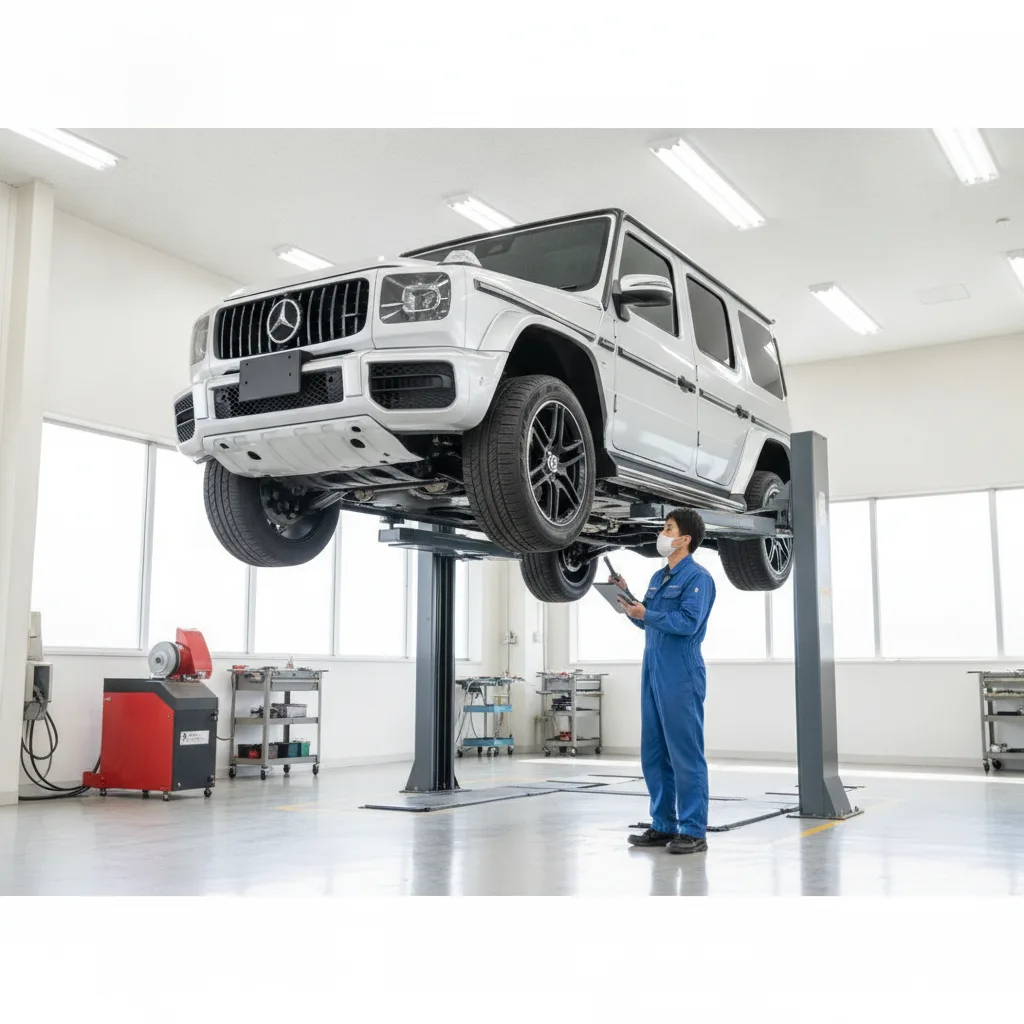
Japanese consumers often associate status and prestige with possessing the latest iteration of a vehicle, particularly for high-end foreign brands. This cultural dynamic means that even perfectly functional and aesthetically pristine cars are traded in relatively quickly to make way for the next model year. The emphasis shifts from long-term ownership to keeping pace with automotive trends and technological advancements.
This rapid turnover floods the Japanese used car market with a surplus of high-quality, lightly used luxury vehicles. You'll frequently find G-Wagens that are only a few years old, with remarkably low odometer readings and impeccable service histories. These cars are often meticulously maintained, reflecting the general high standards of vehicle care in Japan.
What does this mean for international buyers? The abundant supply of these desirable, yet depreciated, luxury cars creates a unique opportunity. Because the domestic demand prioritizes new models, the secondary market for 3-5 year old foreign luxury vehicles sees prices drop considerably. This makes Japan an exceptionally attractive source for acquiring a G-Class at a fraction of its original cost.
This consistent market behavior directly benefits importers, transforming what might be a costly acquisition elsewhere into a strategic investment from Japan. Understanding this cultural drive for newness is key to unlocking the value in Japan's used luxury car market. For insights into auction grades, see our guide to auction sheets.
What Role Do Japanese Car Auctions Play in Pricing?
In 2026, Japanese car auctions significantly drive down prices for luxury vehicles like G-Wagens by fostering unparalleled competition among sellers. This highly efficient, high-volume marketplace naturally creates more favorable buying conditions compared to less centralized markets, directly benefiting international buyers and exporters. The sheer scale ensures a constant supply, which keeps prices competitive.
Japan boasts a highly organized and transparent used car auction system, featuring major networks like USS, TAA, and JU. These platforms list hundreds of thousands of vehicles weekly, from economy sedans to premium G-Wagens. This vast inventory creates an environment where no single seller can dictate prices for long, as buyers always have alternatives. It's a true market economy at work, optimizing for efficiency and accessibility.
The transparency of these auctions is another key factor. Every vehicle comes with a detailed inspection sheet, providing a clear and unbiased assessment of its condition. This standardized grading system minimizes guesswork and builds trust, allowing buyers to bid confidently. When you can trust the information, you can bid more precisely, further tightening the margins for sellers and driving down overall costs.
In our experience, this level of detail and competition is rare outside of Japan. Unlike fragmented private sales in many other countries, where prices can be inflated by individual sellers or regional monopolies, Japanese auctions provide a level playing field. This direct access to a competitive, transparent market is precisely why exporters like Loginet can source high-value vehicles at prices often impossible to match elsewhere. Wouldn't you want to buy from a market designed for buyer advantage?
For international buyers, this means access to a consistent stream of high-quality G-Wagens at prices that reflect their true market value, not inflated local demand. This efficiency directly translates into savings for the end customer, making luxury imports more attainable. To understand more about how these platforms work, you can Learn more about bidding in these dynamic markets through our comprehensive guide.
Are Left-Hand Drive (LHD) G-Wagens Cheaper Than RHD Models?
In 2026, left-hand drive (LHD) G-Wagens are often significantly more affordable in Japan compared to right-hand drive (RHD) models, a peculiar market dynamic driven by local preferences. Despite Japan being an RHD country, many G-Wagens are originally imported as LHD. This configuration, though prestigious, renders them less practical for daily Japanese drivers, directly impacting their domestic resale value.

For a nation where traffic flows on the left and infrastructure like toll booths and drive-throughs are designed for RHD vehicles, navigating an LHD car presents constant minor inconveniences. This practical disadvantage substantially reduces local demand for LHD models, even high-end luxury SUVs. Consequently, these LHD G-Wagens typically experience steeper depreciation within the Japanese market.
Our extensive experience across Japanese auction networks, including USS, consistently shows this price disparity. While the initial import price for a new LHD G-Wagen might be considerable, its resale value inside Japan drops sharply due to these everyday driving considerations. This makes them less attractive to local Japanese buyers who prioritize convenience.
This market quirk creates an exceptional opportunity for international buyers, particularly those in countries that drive on the right. What is considered less desirable for domestic use in Japan becomes a highly sought-after, often more affordable, luxury SUV for export. For those looking to import a premium vehicle without the premium price tag, exploring LHD G-Wagens from Japan can yield significant savings.
Isn't it fascinating how local driving habits can shape the global market for luxury vehicles? This unique situation means Loginet can help you source these LHD bargains and manage the logistics to your port, ensuring you get a G-Wagen that fits both your budget and your country's driving standards.
Is Lower Mileage on Japanese G-Wagens a Myth?
In 2026, the idea that Japanese G-Wagens feature lower mileage is far from a myth; it’s a consistent reality for discerning buyers. Industry analysis frequently highlights that a significant portion of luxury vehicles, including the G-Class, available for export from Japan boast mileage figures considerably lower than those in Western markets. This advantageous trend stems from Japan's unique urban environment and robust public transportation infrastructure.
Japan’s dense urban centers, combined with an exceptionally efficient public transport system, mean residents often rely less on personal vehicles for daily commutes. Major cities like Tokyo, Osaka, and Nagoya offer extensive train and subway networks that make driving less necessary, reducing overall vehicle usage. Even for those who own luxury SUVs like the G-Wagen, the limited parking space and high cost of vehicle ownership further encourage more sparing use.
Moreover, Japan's relatively smaller geographic size compared to vast countries like the United States or Canada naturally limits the distances cars travel. Long road trips are less common, contributing to lower odometer readings. This combination of factors creates a market where even high-value vehicles like the Mercedes-Benz G-Class accumulate significantly fewer kilometers over their lifespan before entering the used car market. What does this mean for importers?
For potential buyers, this translates into a large inventory of used G-Wagens from Japan with markedly lower mileage, often reflecting better overall condition and offering superior value compared to models sourced from Europe or North America. When evaluating these vehicles, transparent auction sheet data serves as definitive proof of mileage and condition. Learning to accurately interpret these sheets is critical for making informed purchasing decisions and confirming the vehicle's history.
For a detailed explanation on how to verify these details, consult our guide on How to read an auction sheet. This transparency helps buyers understand exactly what they are getting, reinforcing the value proposition of importing from Japan.
How to Find and Import Your Own G-Wagen from Japan
In 2026, acquiring a Mercedes-Benz G-Wagen from Japan is more accessible than many importers realize. Once you understand the attractive pricing in the Japanese market, the next logical step is to explore the acquisition process. The journey typically starts with accessing Japan's extensive online car auctions, where various G-Class models are regularly listed. Do you know where to begin your search for a premium vehicle?
After identifying a promising G-Wagen, a thorough inspection is crucial to verify its condition. Reputable exporters offer detailed auction sheet translations and additional photos, ensuring full transparency. With a clear understanding of the vehicle's state, you can then confidently place your bid through a proxy system, competing directly on the auction floor.
Upon winning, the process moves to secure payment and efficient logistics. Loginet streamlines transparent transactions and arranges shipping, typically via Roll-on/Roll-off (RoRo) or container services. Our extensive experience ensures careful handling for its journey from Japan. Ready to explore available G-Wagens? Start browsing the auctions now to begin your import journey with confidence.
Frequently Asked Questions
What is the best age for a used G-Wagen from Japan?
For a used G-Wagen from Japan, the sweet spot is often between 5-7 years old. After a vehicle has passed its second or third 'Shaken' inspection cycle, it typically maximizes depreciation while retaining modern features and reliability. This age offers a balance of significant cost savings compared to new, without compromising too much on the vehicle's condition or technology.
Are there hidden costs when importing a G-Wagen from Japan?
Yes, beyond the vehicle's purchase price, other costs apply. These commonly include shipping, marine insurance, and any import duties or local taxes in your destination country. You should also account for local compliance and registration fees. Always request a comprehensive quote from your exporter and consult with a local clearing agent to understand all potential expenses.
How can I verify the condition of a G-Wagen at a Japanese auction?
The auction inspection sheet is crucial for verifying a G-Wagen's condition at a Japanese auction. It provides a detailed, generally reliable grade and report on the vehicle's exterior, interior, and mechanical status. Loginet also offers additional inspection services, including extra photos and detailed checks, to give you complete confidence before placing a bid.
Can I import a G-Wagen from Japan to the USA?
Importing a G-Wagen from Japan to the USA is subject to the 25-year import rule. This means vehicles must be 25 years or older to be legally imported without significant modifications or exemptions. Therefore, while newer G-Wagens are generally not eligible, classic models that have surpassed the 25-year mark are popular and can be imported.
Conclusion
Key Takeaways
- Japan's strict "Shaken" inspection system and fast cultural depreciation significantly reduce G-Wagen resale values.
- A high volume of vehicles entering the auction market, combined with local preferences, creates competitive pricing.
- Differences in left-hand drive (LHD) versus right-hand drive (RHD) demand further influence export prices from Japan.
These factors position Japan as a unique market for luxury SUVs. You'll find high-quality, low-mileage used G-Wagens at prices often unattainable elsewhere. Meticulous maintenance due to the Shaken system and rapid local depreciation create an ideal sourcing opportunity for international buyers. If you seek a prestigious G-Wagen without the typical premium, Japan offers a compelling import solution.
Ready to find your next luxury SUV? Explore Loginet's extensive Japanese auction listings and discover a wide selection of G-Wagens and other premium vehicles.