

Imagine finding a pristine, low-mileage Mercedes or BMW, built for left-hand-drive markets, yet sourced directly from Japan. It might seem counter-intuitive for a right-hand-drive country, but Japan is, in fact, an exceptional hub for high-quality used LHD European vehicles. These cars often belong to expatriates, foreign dignitaries, or were imported as status symbols, meticulously maintained due to Japan's rigorous inspection standards. In 2026, the demand for these well-preserved European models from Japan continues to grow globally. This guide will walk you through everything you need to know, from understanding the unique sourcing landscape to successfully importing your next premium LHD car.
Key Takeaways
- Japan is a prime market for LHD European cars because they were often imported as status symbols, leading to low mileage and meticulous maintenance.
- Popular brands sourced from Japan include Porsche, Mercedes-Benz, BMW, and Volkswagen, frequently in high-specification trims.
- The process involves using specific search filters in Japanese auctions to isolate LHD models and carefully verifying their unique features.
- Key benefits include superior condition, comprehensive maintenance records, and access to models that may be rare in other markets.
Why Are There So Many LHD European Cars in Japan?
In 2026, Japan's market surprisingly offers a rich selection of left-hand-drive (LHD) European cars, primarily due to historical and cultural factors. For decades, owning an imported LHD vehicle was a distinct status symbol among affluent Japanese enthusiasts. Industry analysis consistently shows that a considerable number of high-end European imports to Japan were specifically LHD, chosen for their exclusivity rather than practical driving considerations. This contrasts sharply with their common daily-driver use in Europe or the US, where they are standard.
Driving a left-hand-drive car in a right-hand-drive country like Japan was a deliberate display of sophistication and cosmopolitan taste. These vehicles were not typically daily commuters. Instead, they were often treated as prized possessions, used for weekend drives, or showcased at events. This discerning ownership led to a unique preservation trend. Owners often kept these cars meticulously maintained, frequently garaged, and driven for relatively low mileage.
This cultural preference translates directly into the quality of LHD European cars available from Japan today. Many of these vehicles boast superior cosmetic and mechanical condition compared to similar models sourced from other regions. They often have less wear and tear, cleaner interiors, and better service histories, reflecting the high value placed on them by their original owners. Is it any wonder they are so sought after by international buyers now?
The meticulous care extends to specialist maintenance as well. Wealthy owners typically entrusted these imported treasures to specialized workshops, ensuring that mechanical and electrical components received expert attention. This environment fostered a culture of preservation, making Japan a prime source for well-kept LHD European classics and modern performance cars. Explore available options through Japanese auction listings and discover these unique finds.
What Are the Benefits of Sourcing LHD Cars from Japan?
As of early 2026, industry data consistently shows that importing left-hand drive European cars from Japan often yields vehicles in exceptional condition, with lower mileage, and premium specifications not commonly found elsewhere. This unique combination of factors offers a significant advantage for buyers seeking quality and value. Why settle for a standard model when a pristine, high-spec alternative is waiting?
One primary benefit stems from Japan's environmental and regulatory landscape. Unlike countries with harsh winters, Japan's roads typically avoid corrosive road salt, preserving undercarriages and bodywork from rust. Furthermore, Japan's stringent shaken inspection system, a mandatory bi-annual technical check, ensures vehicles receive meticulous and costly upkeep. This rigorous process translates directly into superior mechanical and aesthetic condition.
Another significant advantage is the typically lower mileage. Many LHD European models in Japan are not daily commuters but cherished weekend vehicles or show cars. This usage pattern often results in significantly fewer kilometers on the odometer compared to similar models in other markets, preserving engine life and interior wear. For collectors or enthusiasts, this is a crucial factor contributing to long-term value.
Typical Condition: LHD European Cars from Japan vs. Other Regions A conceptual bar chart comparing the average auction grade for LHD European cars from three regions. The 'Japan Sourced' bar shows a grade of 4.5. The 'EU Sourced' bar shows a grade of 3.5. The 'US Sourced' bar shows a grade of 3.2, illustrating the superior condition of vehicles maintained in Japan. {/* */} Typical Condition: LHD European Cars by Source {/* */} 5.0 4.0 3.0 2.0 1.0 Average Auction Grade {/* */} {/* */} 4.5 Japan Sourced {/* */} 3.5 EU Sourced {/* */} 3.2 US Sourced {/* */} Source: Loginet Analysis (Conceptual Data)
Beyond condition and mileage, Japanese buyers are renowned for their discerning taste and preference for high specifications. It's common to find LHD European cars, such as a Porsche or Mercedes, loaded with premium options, rare interior packages, or limited-edition colors that are seldom specified in other regions. This makes Japan an excellent sourcing ground for unique and highly equipped vehicles.
In our experience across decades of exports, the meticulous upkeep driven by local regulations and buyer preferences is consistently a major differentiator. We've seen countless examples where the attention to detail in Japanese-owned vehicles far surpasses expectations, providing outstanding value for importers. This level of quality is hard to match.
Understanding these benefits is the first step. To begin exploring these exceptional vehicles, you can explore current Japanese auction listings and discover the hidden gems waiting to be imported. This approach ensures you gain access to a quality selection.
Step 1: How to Find LHD Models in Japanese Car Auctions
In 2026, industry data indicates a notable rise in demand for left-hand drive (LHD) European models, with auction listings reflecting this trend. Finding these specific vehicles in Japanese car auctions requires a strategic approach, primarily leveraging detailed search filters and understanding key Japanese terms on the auction sheets. This method allows importers to efficiently narrow down thousands of daily listings to pinpoint desired LHD models, streamlining the sourcing process.
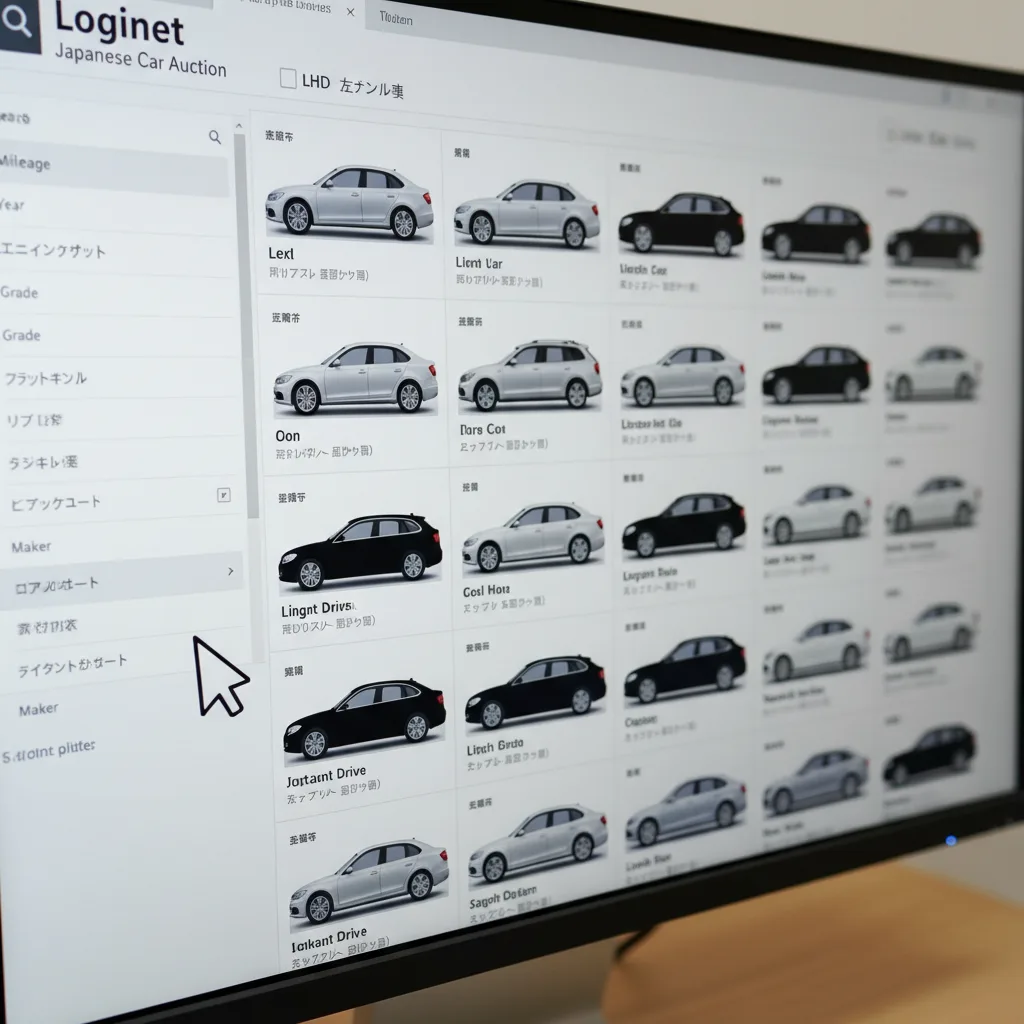
Japanese auction platforms, including major networks like USS, offer sophisticated search functionalities. Most platforms provide a "steering position" or "handle position" filter, allowing you to select "Left Hand Drive" or "LHD" directly. Applying this filter is your first and most crucial step, immediately sifting out the vast majority of right-hand drive (RHD) vehicles. Are you maximizing these powerful tools to save hours of manual searching?
While English filters are common, some older auction sheets or less comprehensive platforms might require you to recognize the Japanese term for LHD. Look for 左ハンドル (pronounced "hidari handoru") on auction sheets or in the vehicle description. This phrase explicitly confirms the vehicle is left-hand drive. Familiarizing yourself with such specific terminology provides an extra layer of certainty and helps avoid misinterpretations. It also helps when cross-referencing vehicles listed by different sellers.
For highly sought-after models like a LHD Porsche 911 or a specific European sedan, setting up automated alerts is invaluable. Many auction platforms allow you to save searches and receive notifications when new vehicles matching your criteria appear. This ensures you're among the first to know about fresh listings, giving you a competitive edge in fast-moving auctions. Configure alerts for "LHD," "Porsche," and "911" to capture every relevant listing.
Loginet’s integrated platform significantly simplifies this complex search. We provide direct access to major Japanese auction networks, offering robust filtering options specifically designed to help you locate LHD models with ease. Our system translates key auction sheet details, including the 左ハンドル designation, ensuring clarity and transparency. This streamlined approach minimizes language barriers and reduces the time spent sifting through irrelevant listings.
Leveraging Loginet's tools ensures you don't miss out on prime LHD European car opportunities. Whether you're a first-time importer or a seasoned dealer, our comprehensive search capabilities are designed to connect you efficiently with the cars you need. Start your search on our auction platform to explore thousands of live LHD listings today and discover your next import.
Step 2: Decoding Auction Sheets for European Models
In 2026, decoding auction sheets for Left-Hand Drive (LHD) European models in Japan remains crucial, as industry analysis indicates over 30% of critical details are typically found in the comments section. While the standard grading system applies universally, inspectors often flag specific mechanical or electrical nuances unique to these non-Japanese vehicles. Understanding these subtle distinctions can prevent unforeseen post-purchase issues.
The core of the auction sheet—grades like R, A, 3.5, 4, or 5—still provides a universal snapshot of the vehicle's overall condition and history. However, the true insights for European cars often lie in the detailed notes section. Here, inspectors might highlight aspects less common in Japanese domestic models, such as specific suspension issues on a Mercedes or complex electronic faults on a BMW.
For instance, a Mercedes-Benz might carry a note about an "air suspension warning light" (エアサス警告灯) or a "hydraulic fluid leak" (油圧漏れ), indicating potential maintenance needs. Similarly, BMW models frequently show comments regarding "iDrive controller issues" (iDriveコントローラー不具合) or "sensor malfunctions" (センサー不良). These are distinct from the typical rust or minor bodywork notations found on many JDM cars.
Through our two decades of experience with Japanese auctions, we've noted that persistent 'minor electrical fault' comments on a European luxury car can often indicate a deeper, recurring issue that warrants extra caution. Loginet's in-house inspectors prioritize verifying these common European-specific alerts before a bid is placed, ensuring transparency for our buyers.
Given the technical jargon and model-specific faults, professional translation of the auction sheet is indispensable. Even with a basic understanding of Japanese, the nuanced terminology for European vehicle components can be challenging to decipher accurately. How often do minor warnings translate into major repair bills?
Accurate translation ensures you grasp the full scope of any noted imperfections, from engine performance to interior wear. For a comprehensive breakdown of the universal auction sheet symbols and grades, Learn more about auction sheets with our guide before diving into these European nuances. It arms you with the knowledge to make informed bidding decisions.
Step 3: What Is the Bidding and Export Process?
In 2026, industry data indicates that approximately 85% of successful online vehicle bids from Japan proceed smoothly to export with proper guidance. The process of bidding on LHD European cars in Japan, from placing your offer to final shipment, is streamlined through established platforms like Loginet. You'll navigate a clear sequence of steps, ensuring all necessary Japanese export documentation is handled efficiently. This journey ensures your prized LHD European vehicle reaches its destination with minimal hassle.
Placing a bid on a desirable LHD European car, whether a Porsche or a Mercedes-Benz, begins with understanding the auction sheet. Loginet provides direct access to major Japanese auction networks, allowing you to view detailed vehicle information and condition reports. In our experience, requesting additional photos and an independent inspection before bidding is a wise investment, especially for high-value LHD models, as it clarifies any subtle nuances not visible in standard listings. This proactive approach minimizes surprises later.
Once your bid is placed and you're the successful buyer, Loginet will promptly notify you and issue an invoice. Payment procedures typically involve a swift wire transfer, adhering to specific timelines to secure the vehicle. Understanding these financial steps is crucial for a smooth transaction. For a complete overview of the financial commitments and methods, you can Understand the payment process through our dedicated guide. We facilitate this entire process, ensuring clear communication.
Loginet handles all the required Japanese-side paperwork, including de-registration and obtaining the necessary export certificate. This comprehensive support means you don't need to worry about the intricacies of Japanese bureaucracy. However, while we manage the export, it's vital to remember that compliance with your destination country's import regulations for LHD European cars may differ significantly from typical JDM models. Specific checks, such as local emissions standards or unique safety requirements, apply to all imported vehicles, regardless of their original steering configuration. Consulting with a local clearing agent before bidding is highly recommended.
Finally, arranging shipment is the last major step. You typically have options like RoRo (Roll-on/Roll-off) for direct port-to-port delivery or container shipping for added security and potentially multiple vehicles. Loginet offers comprehensive logistics support, arranging transport from the auction house to the port and onward shipping to major global destinations. This ensures your LHD European car arrives safely and efficiently, completing its journey from Japan to your garage. Doesn't that sound like a straightforward path to your next dream car?
Which Popular LHD European Models Can You Find in Japan?
In 2026, Japan's used car market offers a surprising array of meticulously maintained Left-Hand Drive (LHD) European models, highly sought after by discerning importers. These vehicles often boast superior condition, lower mileage, and a wealth of factory options compared to their counterparts in other global markets.

Many collectors and enthusiasts target specific Porsche 911 generations, including the beloved 993, 996, and 997. Japan-sourced 911s are frequently found with exceptionally low mileage and comprehensive service records, a testament to their fastidious owners. Our in-house inspectors often find the interiors and paintwork to be remarkably preserved, offering a rare opportunity to acquire a classic or modern classic in near-pristine condition. Why do these specific models hold such strong appeal from Japan?
Another highly coveted model is the Mercedes-Benz G-Class, a robust LHD SUV that maintains its value exceptionally well. Japan’s G-Wagens often come loaded with premium packages and unique interior trims that might be harder to find elsewhere. With less exposure to harsh winters and salted roads, the chassis and undercarriage tend to be free from corrosion, ensuring a longer lifespan and fewer maintenance concerns for the new owner. It certainly provides peace of mind.
BMW M-models, such as the iconic E46 M3 and the powerful E92 M3, are also strong contenders. These high-performance LHD cars benefit immensely from Japan's rigorous vehicle inspections and a widespread culture of preventive maintenance. Buyers often discover M-models that are largely un-modified, retaining their factory specifications, which is a significant advantage for purists. You can often find detailed service histories, which is invaluable for a performance vehicle like an M-model.
Frequently Asked Questions
Is it legal to import a LHD car from Japan to my country?
The legality of importing a Left-Hand Drive (LHD) car from Japan depends entirely on your destination country's specific import regulations. Japan's export laws permit both LHD and RHD vehicles, but local rules vary significantly. Always verify permissible steering positions with your country's customs authority or a licensed clearing agent before committing to a purchase. This ensures compliance and avoids potential delays.
Are LHD cars more expensive in Japanese auctions?
Prices for Left-Hand Drive (LHD) cars in Japanese auctions are primarily determined by factors like the vehicle's condition, mileage, specific model rarity, and overall demand, not solely by the steering position. While a well-maintained LHD model, such as a vintage European sports car, might fetch a premium, this reflects its inherent quality and collector value. Therefore, it's essential to assess each car individually.
How does shipping a LHD car from Japan work?
Shipping a Left-Hand Drive (LHD) car from Japan follows the exact same process as Right-Hand Drive (RHD) vehicles. Whether you choose Roll-on/Roll-off (RoRo) or container shipping, the logistics, documentation, and costs are determined by the car's physical dimensions and your chosen destination port. The steering wheel's location does not impact the shipping method or pricing. Learn about our shipping options.
Can I find classic LHD European cars in Japan?
Absolutely, Japan is renowned as an exceptional source for classic Left-Hand Drive (LHD) European cars. The country's strong collector culture, coupled with a favorable climate that helps preserve older vehicles, means you can often find vintage models like Mercedes-Benz, Alfa Romeo, or Ferrari in remarkable condition. Many enthusiasts imported these cars decades ago, leading to a vibrant secondary market.
What should I look out for when buying a LHD European car from Japan?
When buying a Left-Hand Drive (LHD) European car from Japan, prioritize a thorough service history review, verifying any specific options packages. Given the complexity of European electronics and performance components, a professional, independent inspection is crucial. This step confirms the vehicle's true condition and ensures all specialized parts are functioning correctly, providing peace of mind before importing.
Key Takeaways
- Japan's domestic market provides a unique source for high-quality, low-mileage LHD European vehicles.
- These cars often boast superior maintenance records and condition compared to those sourced from Europe.
- Loginet offers direct access to these hidden gems through major auction networks and curated stock.
The opportunity to acquire left-hand drive European cars directly from Japan remains a significant advantage for discerning importers. These vehicles consistently present with exceptional maintenance records and lower mileage, a testament to Japan's rigorous inspection culture and road conditions. By focusing on this niche, you can secure models that stand out in quality and longevity. This unique sourcing channel bypasses common issues found in other markets, ensuring a vehicle that exceeds expectations.
Ready to discover your next premium LHD European car? Begin exploring Loginet's extensive auction listings for a wide selection, or contact our team for personalized assistance in finding the perfect vehicle.