

The appeal of a Kei camper van is undeniable. These miniature marvels offer unparalleled fuel efficiency and nimble handling, making them ideal for adventurers seeking freedom on a budget. You've probably seen their charming designs and wondered how to get one in your driveway without the hefty price tag of local imports. Many believe directly sourcing from Japan is too complex, filled with hidden costs and confusing auction sheets. This guide demystifies the entire process, showing you step-by-step how to secure your very own Kei camper through Japanese auctions with Loginet, ensuring a transparent and straightforward journey from bid to delivery.
Key Takeaways
- Kei campers offer a unique, fuel-efficient travel experience but must be over 25 years old to be legally imported into many countries like the US.
- The import process involves finding a vehicle at auction, arranging inland transport in Japan, booking RoRo shipping, and handling customs clearance at your port.
- Budget for more than the auction price; total costs include the vehicle, exporter fees, shipping (often $2,000+), and destination port charges/taxes.
- Using an established exporter like Loginet provides access to major auctions (USS, ARAI) and simplifies the complex documentation and logistics process.
What Are Kei Campers and Why Are They So Popular?
In 2026, Kei campers have captivated a global audience, emerging as a surprisingly practical solution for compact adventure. These miniature marvels originate from Japan's unique 'Kei' vehicle class, characterized by their strictly limited engine size, typically 660cc, and compact dimensions. But what makes these tiny homes on wheels so incredibly desirable today?
Their appeal lies in a clever blend of efficiency and ingenious design. Industry analysis consistently shows that Kei campers deliver impressive fuel economy, often achieving 30-40+ miles per gallon, a significant factor for budget-conscious travelers. Despite their small footprint, manufacturers and custom builders utilize every inch, transforming them into functional living spaces. Their nimble size also grants exceptional maneuverability, perfect for navigating tight city streets or exploring remote trails.
Popular base models for these micro-campers include reliable workhorses like the Suzuki Every, Daihatsu Atrai, and Honda Acty. These vehicles, originally designed for utility, offer robust platforms for customization. Critically, their acquisition and running costs are a fraction of what you would spend on larger, traditional RVs or full-sized camper vans. This simplicity and affordability make them an accessible entry point into adventure.
At Loginet, we've observed a significant surge in interest for these unique vehicles passing through Japanese auctions in 2025 and 2026. Our in-house inspectors often highlight the ingenious conversions and excellent condition, reflecting the meticulous care they receive in Japan. This firsthand experience confirms their growing appeal for buyers seeking efficient, versatile, and budget-friendly adventure. Learning how to read auction sheets can help you find your ideal model.
How Do You Find the Best Kei Campers in Japanese Auctions?
In 2026, successfully sourcing a Kei camper van from Japanese auctions often hinges on specialized knowledge, as industry data suggests many first-time importers miss critical camper-specific details on auction sheets. Partnering with an experienced export agent like Loginet streamlines this complex process, helping you navigate the unique challenges of inspecting these compact recreational vehicles to secure an ideal purchase.

Finding your perfect Kei camper begins with access to the right auction networks. Loginet provides direct access to major Japanese auction houses, including USS and others, through our user-friendly online portal. This allows you to browse thousands of listings daily, filter by vehicle type, and specifically look for "Kei camper" or similar keywords. Using an agent provides peace of mind, as we handle bidding, negotiation, and paperwork, acting as your eyes and ears on the ground in Japan. In our experience, this level of support significantly reduces the risk of unexpected issues for buyers.
Once you find a potential Kei camper, understanding its auction sheet is paramount. This detailed document offers insights into the vehicle's condition, but for campers, specific sections deserve extra scrutiny. Pay close attention to interior grades like C or D, which often indicate heavy use, staining, or even damage to upholstery and fixtures – common in vehicles designed for prolonged living. For an in-depth guide on interpreting these crucial documents, you can learn more about auction sheets.
Beyond general wear, examine the auction sheet for any notes on modifications. Kei campers are frequently customized, and while some modifications might be desirable, others could pose compliance issues in your destination country or suggest amateur alterations. Furthermore, rust is a significant concern, especially around the wheel arches, underbody, and any areas where water might accumulate, as these vans are often exposed to varying weather conditions. Are you sure you're catching every subtle detail that could impact your investment?
It is critical to remember that auction inspectors primarily assess the vehicle's mechanical and structural integrity. They generally do not test the functionality of camper-specific equipment such as sinks, stoves, refrigerators, pop-top mechanisms, or auxiliary heating systems. This means that, while the van itself is graded, the camper conversion aspects are typically an "as-is" purchase. Always budget for potential repairs or servicing of these components once your Kei camper arrives.
What is the 25-Year Rule and How Does It Affect Imports?
As of 2025, the 25-Year Rule is a critical federal regulation for importing vehicles into the United States, particularly relevant for enthusiasts eyeing classic Japanese models like Kei camper vans. This rule stipulates that vehicles 25 years or older from their date of manufacture are exempt from modern US safety and emissions standards set by the Department of Transportation (DOT) and Environmental Protection Agency (EPA).
This exemption means that once a vehicle reaches its 25th birthday, down to the exact month of manufacture, it can legally enter the US without needing costly modifications or certifications to meet current regulations. However, it's crucial to understand that this is a federal exemption. Individual states may have their own distinct registration and emissions requirements, with states like California often having more stringent rules.
While the US observes the 25-year mark, other countries have different age-based import regulations. For instance, Canada allows vehicles to be imported once they are 15 years old. Australia's rules can vary by state and specific vehicle type, often requiring compliance with local standards even for older cars. Isn't it fascinating how varied global import laws can be?
For those looking to import a Kei camper van, identifying models manufactured in 2000 or earlier for import in 2025 or 2026 is key to leveraging this rule. This significantly widens the selection of quirky and functional mini-campers available from Japanese auctions. Always verify the current month of manufacture to ensure compliance. Check our country-specific guides for more to avoid unexpected hurdles.
How Much Does It Really Cost to Import a Kei Camper?
In 2026, many prospective Kei camper importers underestimate the true landed cost, which can significantly exceed the initial auction price. Industry analysis indicates that various fees often add 50-70% to a vehicle's purchase price, making a comprehensive cost breakdown essential for budgeting and avoiding unwelcome surprises. Understanding these components from the outset prevents unexpected financial burdens.
The journey begins with the Free On Board (FOB) price, which combines the actual auction hammer price, our agent fee for facilitating the bid, and inland transport to the Japanese port. Next comes ocean freight. In our experience, Kei camper vans, despite their compact size, often have increased height due to their camper conversions. This can push RoRo shipping costs into the $2,000 to $3,000 range for many destinations, which is significantly more than a standard sedan.
For instance, consider a Kei camper purchased for approximately $5,000 at a Japanese auction. This might incur an additional $1,000 for agent fees and inland transport, bringing the FOB price to $6,000. Adding an estimated $2,500 for ocean freight, your total investment is already $8,500 before the vehicle even leaves Japan. This initial calculation helps you understand the financial commitment involved.
Estimated Cost Breakdown for Importing a Kei Camper A donut chart illustrating the typical cost allocation for importing a Kei camper van from Japan. The costs are broken down as follows: Vehicle Auction Price (FOB) accounts for 50% of the total. Ocean Freight is the next largest portion at 25%. Destination Duties & Port Fees make up 15%. Finally, Exporter & Japan-Side Fees constitute the remaining 10%. Source: Loginet Analysis. Estimated Cost Breakdown for Importing a Kei Camper Total Cost Vehicle Price (FOB): 50% Ocean Freight: 25% Destination Fees: 15% Exporter Fees: 10% Source: Loginet Analysis
Upon arrival, destination costs become the next major factor. These typically include port handling fees, local customs duties, and often a clearing agent's fee. For example, in the United States as of early 2026, Kei cars generally face a 2.5% import duty, while some modified vans classified as trucks could attract a 25% duty. This substantial difference can dramatically alter the final cost, can't it?
Considering these many variables, securing a full, personalized quote upfront is absolutely critical. It ensures you understand every single line item, from the moment the car is purchased in Japan right through to its arrival at your local port. This proactive approach prevents any unexpected financial burdens, transforming a dream import into a manageable reality. Get a personalized quote to ensure clarity on all costs.
What is the Step-by-Step Process From Winning Bid to Port Arrival?
In 2026, successfully importing your Kei camper van from a Japanese auction to your destination port follows a clear, managed process. Industry analysis suggests that exporters with direct auction access and established logistics networks significantly reduce post-bid processing times by up to 25%. This structured approach ensures every critical step, from payment to vessel tracking, is handled with precision, giving you confidence in your shipment's journey.
Once your bid is successful, the initial step involves prompt payment of the vehicle's cost and auction fees. You'll receive a detailed invoice outlining all charges, and timely settlement is crucial to avoid penalties or delays. We then arrange efficient inland transport for your Kei camper from the auction house to our dedicated export yard in Japan, where it awaits the next stage of its journey. This seamless transfer is managed by our experienced ground team.
The next critical phase is the export documentation process, primarily securing the official Export Certificate. This document confirms the vehicle's de-registration from Japan and is essential for legal export. Our team meticulously handles all the necessary paperwork, submitting it to the Japanese government on your behalf. For more details on required documents, see our import guides.
Following documentation, we proceed with booking your Kei camper onto a Roll-on/Roll-off (RoRo) vessel. RoRo is often the most economical and efficient method for vehicle transport, offering direct loading onto the ship. We secure a slot for your vehicle on the earliest available vessel heading to your preferred port, ensuring a smooth transition from yard to sea. In our experience, careful scheduling at this stage can shave days off the overall transit time.
After the vessel departs, you'll receive key shipping documents by mail, prominently featuring the Bill of Lading (B/L). This document serves as proof of ownership and is vital for customs clearance at your destination. Other documents, such as the inspection certificate and export certificate copy, will also be sent. Is it not reassuring to know all your essential papers are en route, ready for your vehicle's arrival?
Finally, you can track your vessel's journey online using the provided shipping line details. This allows you to monitor its progress across the ocean and estimate its arrival date at your port. Knowing the precise location of your Kei camper provides peace of mind and allows you to coordinate with your clearing agent effectively, preparing for the final step of collection.
What Happens After Your Camper Arrives at the Port?
In 2026, once your Kei camper van arrives at its destination port, the journey shifts from international shipping to domestic clearance and registration. This crucial phase involves navigating local customs regulations, paying applicable duties, and securing release before you can legally drive your new micro-camper.
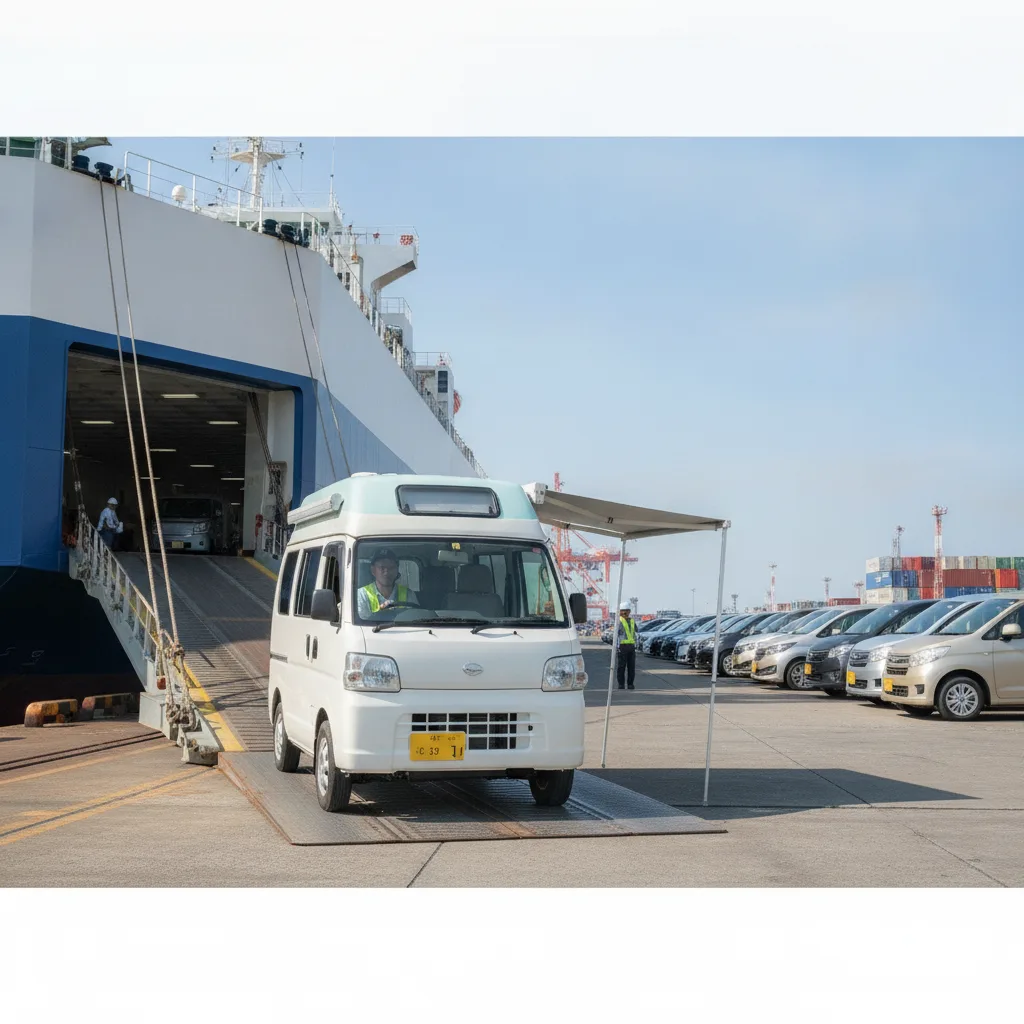
Typically, you'll need to engage a licensed customs broker to manage the complex entry process. These professionals help file necessary documentation, which in some countries might include forms like entry summary declarations, Department of Transportation (DOT) clearances, and Environmental Protection Agency (EPA) certifications, verifying your vehicle meets local standards. Industry analysis indicates that brokers expedite customs clearance by up to 40% compared to self-filing.
After documentation is in order, expect to pay import duties, taxes, and various port handling fees. These costs vary significantly by destination country and the vehicle's value, so it's wise to budget appropriately. Your customs broker can provide an estimated breakdown, helping you avoid unexpected charges.
Once all duties are paid and documents approved, customs will issue a release. You can then arrange for pickup. Many buyers opt for a local transport service to move the Kei camper from the bustling port to their home or a secure storage facility. After all, how will your new Kei camper hit the road without proper registration?
The final step involves titling and registering your Kei camper van with your local Department of Motor Vehicles (DMV) or equivalent authority. This requires presenting all your import paperwork, including the customs release and proof of ownership. Successfully completing this ensures your unique Japanese import is fully compliant and ready for your next adventure. Learn more about country-specific import regulations
Frequently Asked Questions
Are Kei campers street legal everywhere in the US?
While federally legal to import Kei campers over 25 years old, state laws regarding their use on public roads can vary significantly. Most states permit them, but some may impose restrictions on highway use or require special registrations. Always confirm specific requirements with your local Department of Motor Vehicles before importing.
How fast can a Kei camper van go?
Kei camper vans are engineered for Japanese city and country roads, not high-speed interstates. Most models typically reach top speeds of around 60-65 mph (100-110 km/h). They offer comfortable travel for daily commutes and scenic routes but are not designed for sustained, long-distance highway driving.
What are the most common problems with imported Kei campers?
Like any 25-year-old imported vehicle, Kei campers often face challenges such as rust, especially from snowy regions of Japan. Aging rubber components like hoses and belts are common, as is potential for deferred maintenance. Additionally, the aftermarket camper modifications themselves may require repair or refurbishment upon arrival.
Do I need an import broker or can I do it myself?
While you will need an exporter in Japan, like Loginet, you can technically act as a self-filer for US customs. However, the process involves complex paperwork and strict compliance requirements. It is highly recommended to use a licensed customs broker to manage these details, which can prevent costly delays, storage fees, and ensure a smoother import experience.
Can you get parts and service for a Kei camper?
Obtaining parts for Kei campers is becoming easier. Basic service items, such as filters and spark plugs, can often be cross-referenced with locally available parts. However, body panels and specific engine components typically need to be ordered directly from Japan. A growing online community and specialist importers are continually improving parts accessibility.
Conclusion
Key Takeaways
- Kei camper vans offer a unique blend of efficiency and adventure.
- Thorough auction sheet review and trusted exporter partnership are crucial.
- Loginet simplifies the import process from Japanese auctions.
Owning a Kei camper van opens up a world of compact adventure, blending Japanese engineering with the freedom of the open road. These unique vehicles aren't just transport; they're a lifestyle choice, offering reliability and efficiency in a charming package. While the import process can seem complex, partnering with an experienced exporter like Loginet ensures a smooth, transparent journey from auction floor to your driveway. We understand the nuances of the Japanese market and we're here to guide you. Why wait to start your next great adventure?
Ready to find your ideal Kei camper? Browse Loginet's live Japanese auction feed today.